Why do we still need programmers? What the engineer does when AI writes the code
Some people say programming is over. Others say nothing changed and the code is just written a bit faster. Both are wrong. This page follows one small ticket, "Add a refund button", from an idea to production, and shows which part AI does, which parts stay with you, and what companies now expect from an engineer. It is part 2 of our series; part 1 covers 70 years of "we will not need programmers".
The question
If AI writes the feature in 5 minutes, what should you be doing? There is real competition between the big companies today, not only to give you AI but over the shape of the software industry itself. Agents can already act for you, and that changes how products are built and sold.
So the honest answer sits between the two loud ones: programmers are not finished, but the job changed. If you want the history first, watch part 1 (opens in a new tab).
One ticket and the 7 stages
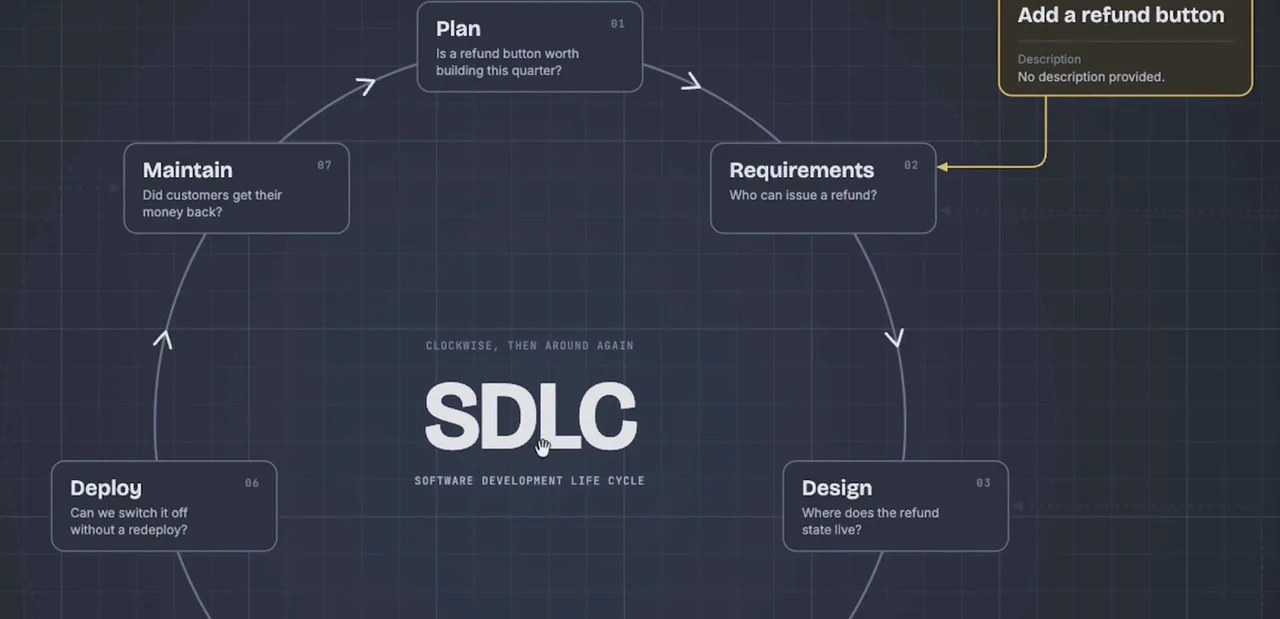
The ticket is as simple as it gets: add a button that gives the customer their money back. To ship it, a serious team goes through the software development life cycle (SDLC). Your company may use other names or only part of it, but the cycle is roughly the same everywhere:
- Plan: leads, product, the CTO or CEO decide whether we need the button at all, and in which quarter.
- Requirements: who needs it and what exactly it must do.
- Design: the technical design, not the UI. What the client handles, what the backend handles, new tables or views in the database, API versioning, enums.
- Build: turning that design into code. This is the step AI now does, in 5 minutes or less depending on your setup.
- Test: unit tests, E2E, a QA team. The test decides whether it goes to production.
- Deploy: to the cloud (AWS, Azure, GCP) or your own VPS.
- Maintain: bugs, fixes, and new features on top of the old one, which starts another round of the cycle.
AI does the build step
When someone says "AI builds software in 5 minutes", they mean the build step only. Either they do not know the rest of the cycle exists, or they know and benefit from saying it. Planning, requirements, design, testing, deployment and ownership still need people.
This is not meant to discourage anyone who builds with vibe coding. If you have an idea, AI is enough to build an MVP and show it to an investor without hiring a programmer. More people making software means more work for programmers, not less.
Why full stack is no longer enough
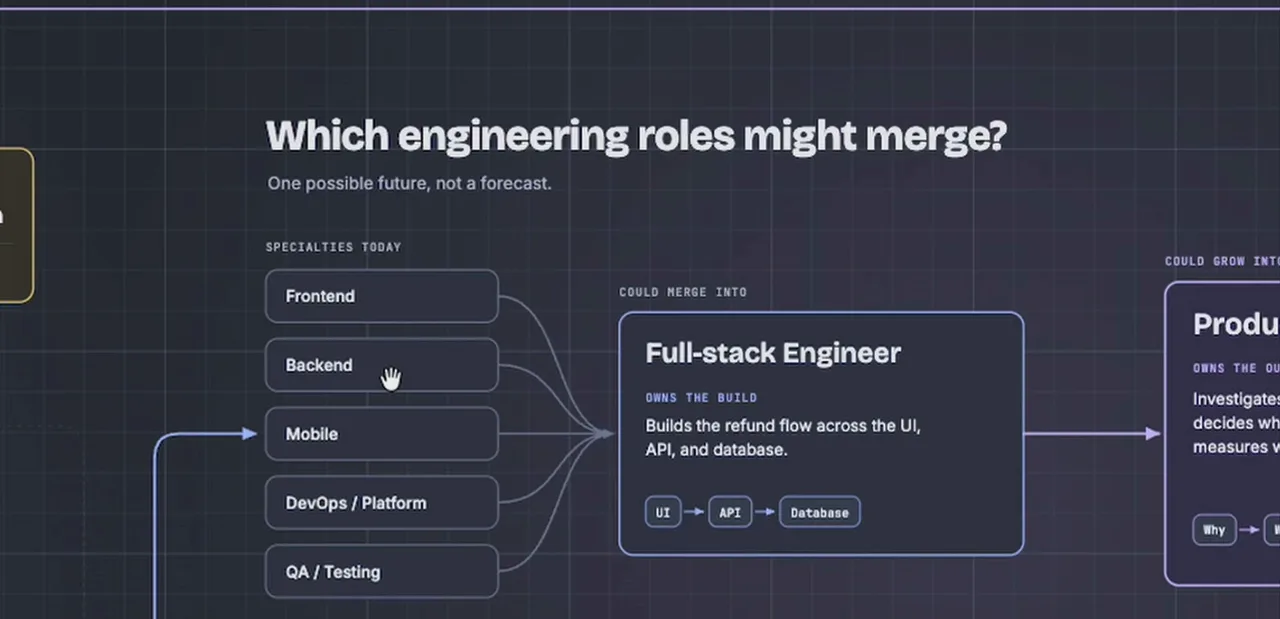
Frontend, backend, mobile, QA: each of us used to hold one piece. Now that writing the code itself got easier, the borders between those roles are melting, and they merge more easily into full stack. If you understand JavaScript, you can get into Node, though the backend still needs more algorithms and fundamentals than the frontend.
A full-stack engineer builds the UI, the API and the database. That used to be the last stop. It is not anymore.
The product engineer owns the outcome
The next step is the product engineer: someone who handles the whole cycle, not one stage. A CEO or CTO can sit with ten engineers, say "this is the plan and this is the feature I want", and leave everything else to them.
- Why: why do customers need this, and which customers.
- What: what we build and how.
- Ship: test it before production, ship it, and test it again after production.
- Measure: check that it did what it was supposed to do.
The product engineer owns the outcome, the result, not just the code. The title is not settled: some call it integration engineer, and there are other names. Companies that still do not know how to integrate AI need exactly this kind of person to move them forward.
AI takes tasks, not jobs
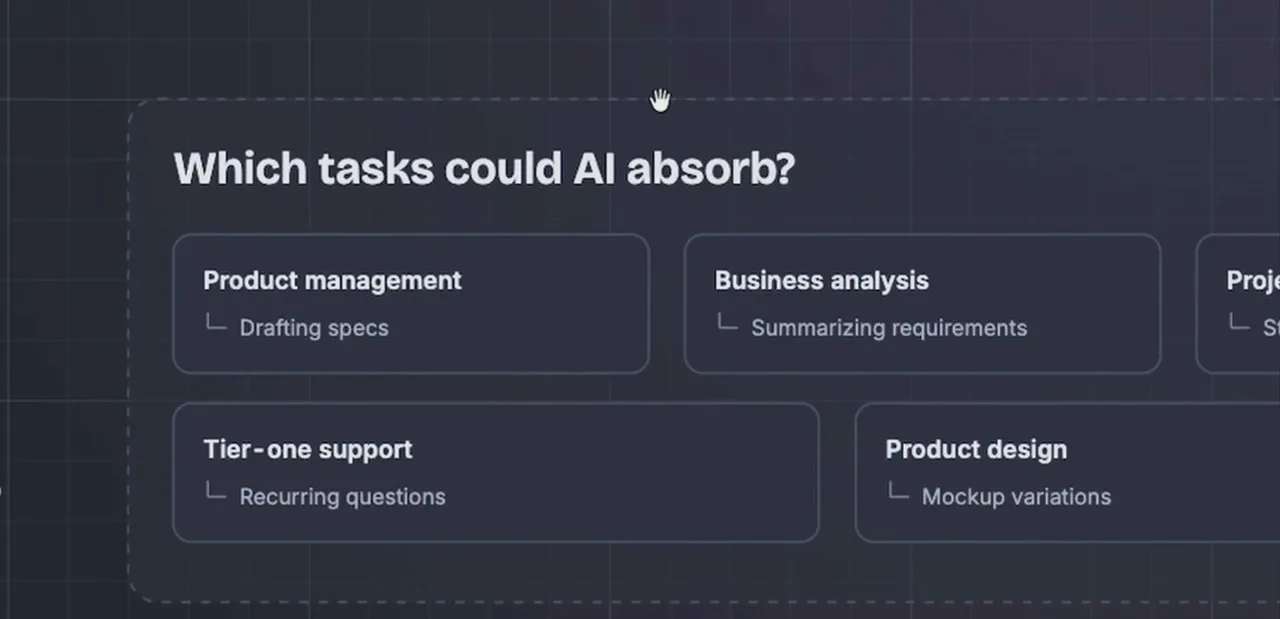
So far AI does not take whole jobs. It takes tasks out of them:
- From the business analyst: summarizing requirements.
- From the project manager: the regular status reports.
- From the programmer: technical writing such as the change log after a release.
- Tier-one support: the recurring questions and ordinary use cases with no edge cases.
- Product design: mockup variations.
Think of your job as four things you do. AI takes one, you still have three. It takes another, you have two. The day it takes the fourth, there is nothing left. Many businesses, especially B2B, do not need excellent output, only something that works, so "good enough" AI is a real threat to a task. If AI starts taking your tasks, add more: if you do four things, make them ten or twenty.
The demo: a refund button that times out
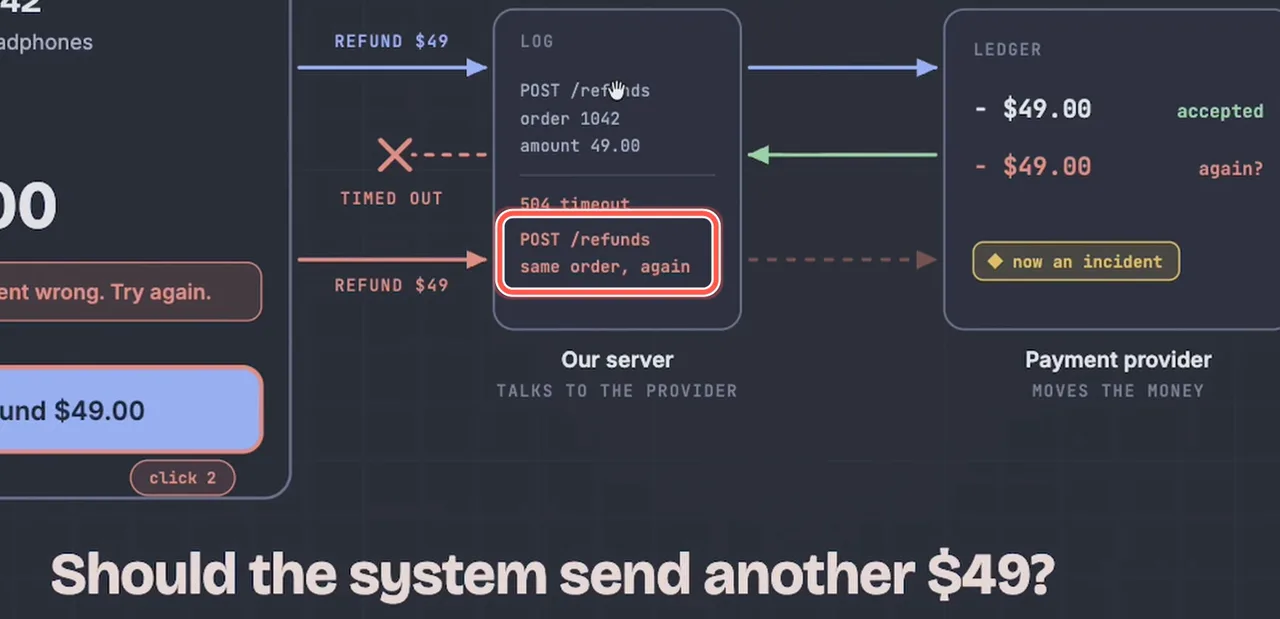
AI wrote the card, the API, and the call to the payment provider (and the client never talks to the payment provider directly). In staging everything is green:
The client sends a refund request for 49 (dollars or pounds).
The backend receives it and writes a log line.
The backend calls the payment provider, and the provider answers on the webhook: 200, done.
The client shows a toast: your refund is on its way.
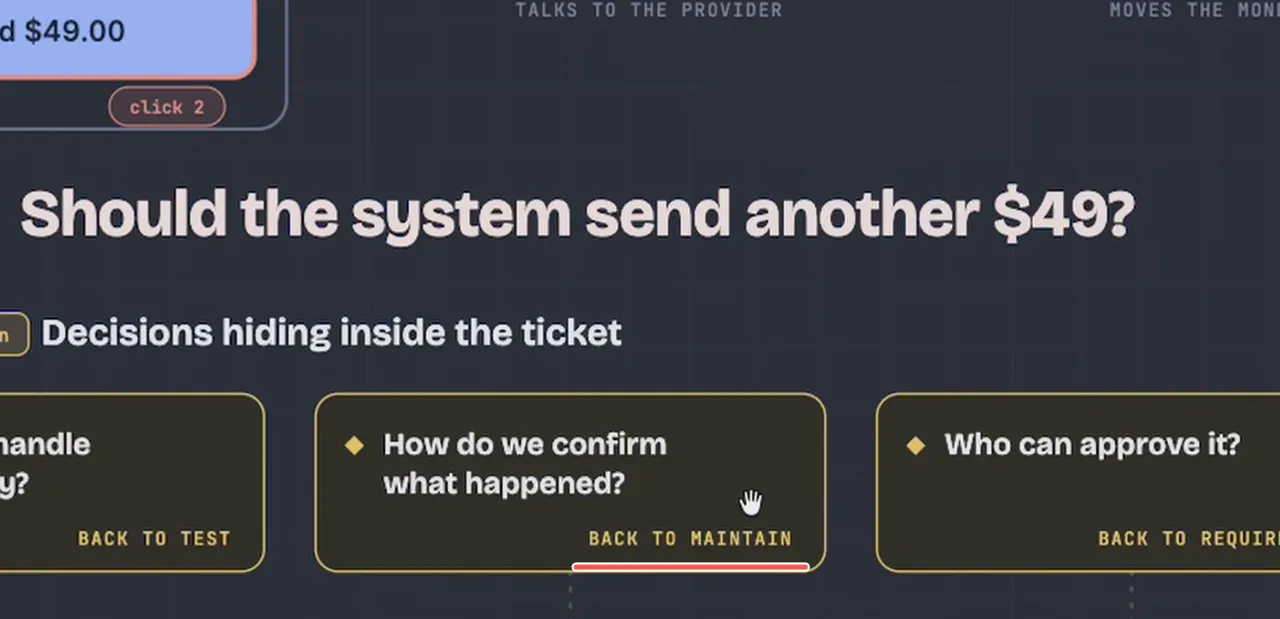
Then the first try in production. The backend logs, calls the provider, the provider answers, and after that the server returns 504 timeout. The request the client sent never got its answer, so the client shows "Something went wrong. Try again." The user tries again, and a second refund request goes out. The provider accepted the first one. Now there are two. What should the system do?
The bottleneck moved to review
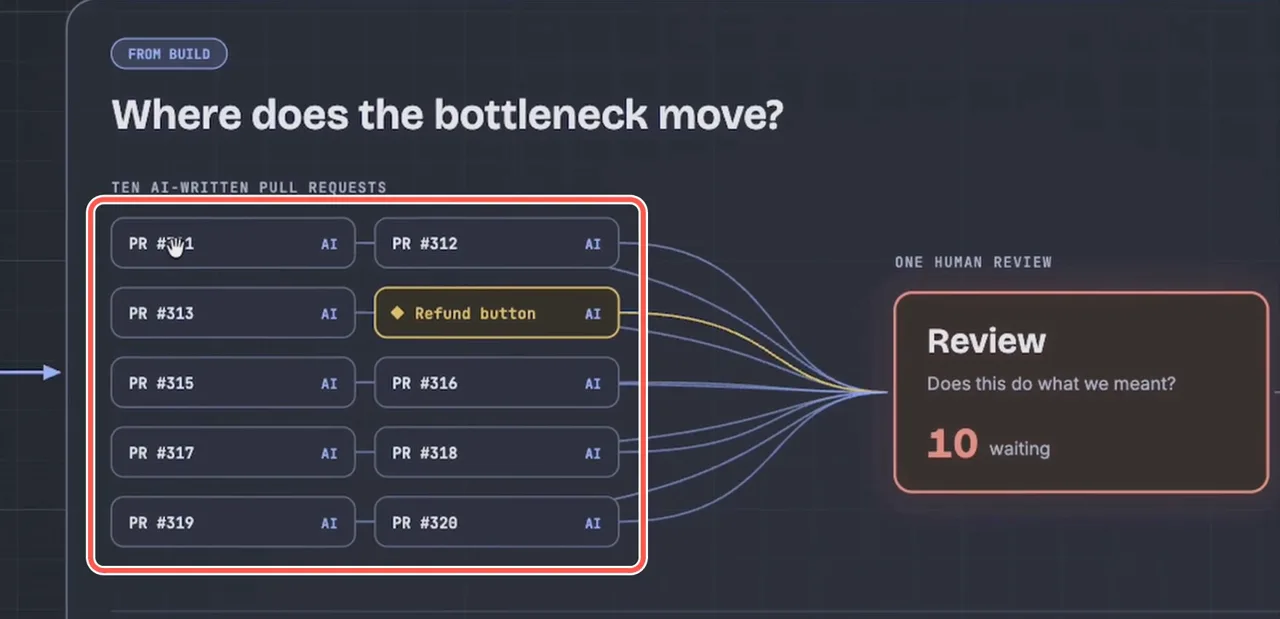
You used to spend a week writing a PR. Today you spend a week reviewing PRs. You open ten PRs with AI, your colleague opens ten, and someone has to review all of it. There is not enough time or enough people, so sometimes you review with AI too. That is why companies need people who understand the whole life cycle and the business domain, and why the load falls more on seniors.
The old "sorry, pass that to the product team" is fading. You are increasingly responsible for the feature from the idea to the end, so you need enough of the business to work with operations, customer service and everyone else in the same meeting.
5 minutes of code, and the rest of the day
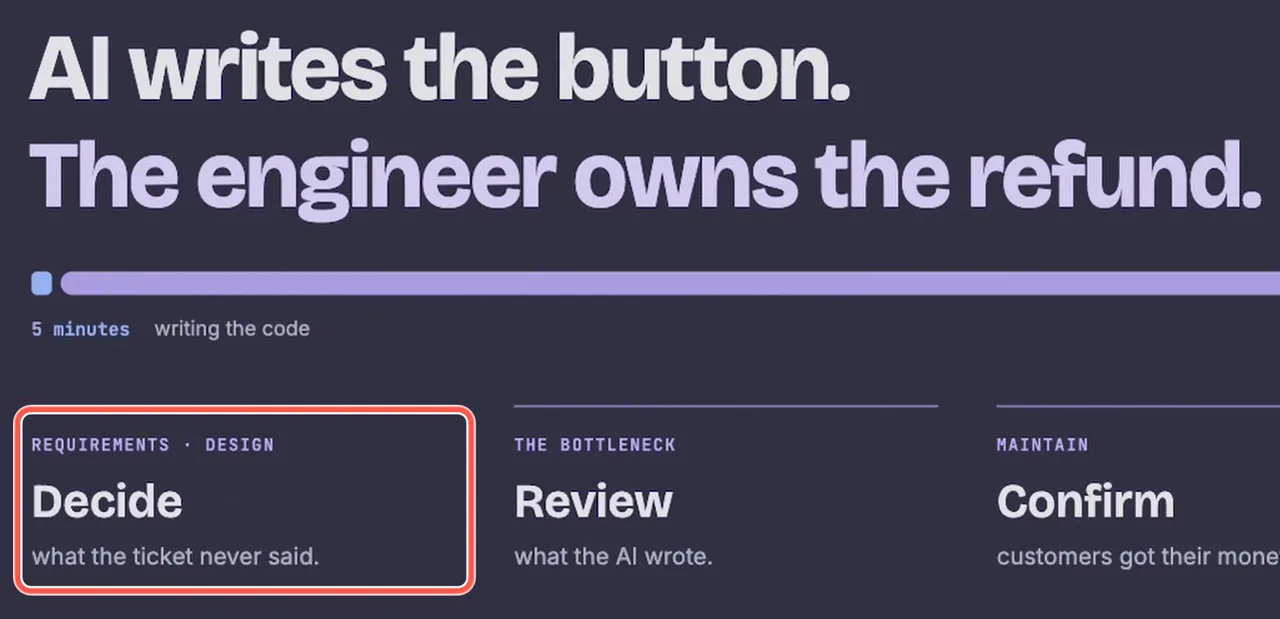
AI writes the button; you own the feature from start to finish. Of an 8-hour day, about 5 minutes is writing code. Nobody expects you to spend hours typing code anymore (spending hours debugging is fine). The rest belongs to the four things a software engineer should learn:
- Decide: the requirements and design, what the ticket never said.
- Review: what the AI wrote.
- Confirm: that it worked, for example that customers got their money back.
- Own: the whole loop.
What to do today
- Ask yourself: what do I do besides writing code? If the answer is nothing, start today. Count on your fingers the things you do that AI does not, and grow that list.
- Learn your domain. If you work in a company that is growing with AI, learn its domain well so you can take part in what comes next.
- Study the fundamentals: algorithms, and how the pieces connect. If you are frontend, know what happens in the backend when you call an API, what a webhook is, what REST is.
- Take one or two architecture courses, not more, and ask people with experience when you have questions.
This is an opinion from personal experience, not a job promise, and the demo is a simplified example. If you think something here is wrong, say so in the comments under the video.
Written from the video on 13 November 2026. It is an opinion and a forecast, not a promise.